
How to Plan a Content Shoot That Fills Your Calendar for Months
Count the posts on your content calendar for the next 13 weeks, then count the photos and clips you actually have to fill them.
A content shoot is a planned day that captures photo and video across product, lifestyle and UGC-style content for every channel you post on. Planning one takes six steps, and the shot list carries most of the weight.
We plan and run these days for consumer brands at our Santa Monica studio and on location, so everything here comes from call sheets we've filled in ourselves.
When a shoot day runs late or comes back thin, the cause is usually something nobody wrote down the week before.
Key Takeaways
Work backward from the calendar. Posts per week, multiplied by 13 weeks, tells you how many assets the day has to deliver.
Build the shot list by platform. Plan each set-up for 9:16, 4:5, 1:1 and/or 16:9 so one frame gives you each crop you need.
Schedule by efficiency. Schedule your day to use time effectively. Consider the angles you’ll be shooting at and the lighting changes as you place shot by shot in the schedule. Shoot photo and video on each scene before you reset, and get the hero shots done first.
Confirm usage in the brief. Where the content can run, and for how long, is far easier to settle before anyone is booked.
Organize files so anyone can find them. Sort by Brand, Campaign / Shoot #, Year, Ratio, and Version
Quick answer: To plan a content shoot, work through six steps.
1. Set goals, platforms and content volume.
2. Write the creative brief.
3. Build the shot list by platform and shot type.
4. Lock the logistics.
5. Schedule the shoot day by scene.
6. Plan post-production and delivery.
Hart & Highland plans, shoots and edits content for consumer brands from our Santa Monica studio and on location.
How to Plan a Content Shoot in 6 Steps
Step 1. Set Goals, Platforms and Content Volume
Start with the calendar. Decide which platforms you'll post on for the next 90 days and how often, then multiply posts per week by 13 to get the number of assets the shoot needs to cover.
That sample plan needs more than 230 assets for one quarter. Some will come from a single frame cropped three ways, so the number of set-ups you need is smaller than it looks.
A launch adds its own list on top. Our content launch packages bundle video, photography, graphics and ad-ready assets for a new SKU or flavor, timed to land before launch day.
Step 2. Write the Creative Brief
The creative brief is the one document everyone on set reads. Keep it to a page or two so the photographer, stylist and talent actually get through it.
Objective. What this content needs to do, such as launch a flavor or fill a quarter of social.
Audience. Who you're talking to and where they'll see it.
Key message. The one idea every shot should support.
Mood board. A collage of 10 to 15 reference images that sets the light, color, props and styling.
Brand guidelines. Colors, type, logo placement and anything to avoid.
References. Past posts, ads or competitor work you want to match or move away from.
Deliverables. The asset count from Step 1, split by platform and format.
What usage is included. Where the content can run, such as organic social, paid ads, retail partners or packaging, and for how long.
Settle usage at the brief stage. Talent and creator fees change with where content runs and for how long, and pricing that in before anyone is booked saves a hard conversation later.
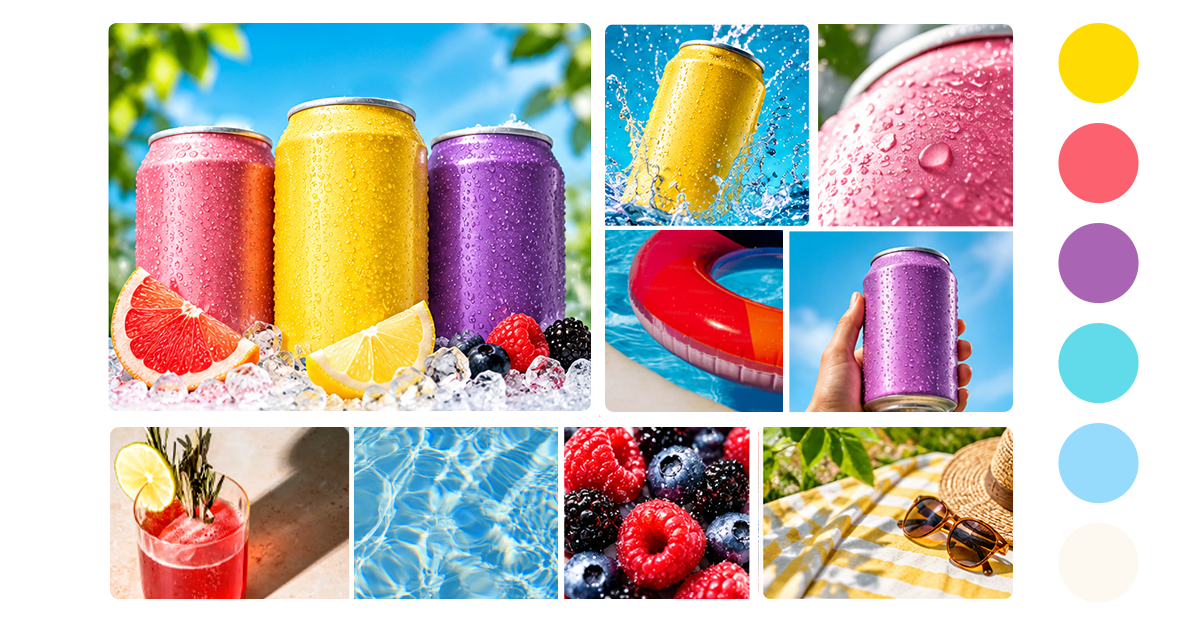
Step 3. Build the Shot List by Platform and Shot Type
A shot list is the line-by-line plan of every image and clip you need. Building it as a grid, with shot types down the side and aspect ratios across the top, shows which set-ups can feed several platforms at once.
A-roll is the footage that carries the message, like someone talking to camera or demoing the product. B-roll is the supporting footage you cut over it, such as pours, textures and hands at work.
Frame every set-up wide enough to crop to all four ratios, and keep the product in the center third. For phone-style clips, we shoot UGC-style content on the same day, and our product vs lifestyle breakdown helps you decide which images to prioritize.
Step 4. Lock the Logistics
Choose studio or location first, because everything else follows from it.
Book talent and creators early, and confirm what usage is included in their agreements. For props, write a list per set and buy duplicates of anything that can break, melt or spill. For wardrobe, gather talent sizing early so wardrobe can be confirmed alongside prop approvals. That leaves enough time for creative approvals and sourcing, and less time spent on approvals while shooting.
Food and beverage shoots need a food stylist who knows how products behave under hot lights, since ice melts, foam drops and labels catch glare, and who can think quickly when visual quality is at risk. That's why styling is built into every one of our food photography shoots.
Check permits early if you're shooting on location. In Los Angeles, FilmLA requires different levels of permits depending on what you're shooting, where you're shooting and the production risk involved, and its website lists estimated processing times. We generally submit at least five business days before the shoot to leave room for any final insurance requests or additional forms.
Then pull it all into a call sheet, the one-page plan with call times, addresses, contacts, parking, the run-of-show and the weather. Send it two days out and again the night before.
Step 5. Schedule the Shoot Day
Group the day by scene. On each scene, shoot the photo list and the video list before anyone moves the lights, because coming back to a scene means resetting the lighting and moving the camera team all over again.
Your run-of-show is the hour-by-hour plan that lives on the call sheet. It predicts the bottlenecks of the day and builds in buffer for the scenes that need extra love and care. It also keeps the whole team on the same page and saves everyone a "what's next?" conversation.
Step 6. Plan Post-Production and Delivery
Agree the number of edit rounds before the shoot. One round of selects and one or two rounds of retouching or edits keeps feedback focused.
Then set a file naming convention and stick to it. Every name should tell you what a file is without opening it.
Put together, a finished file reads brightside_springlaunch_9x16_v2.mp4, and the same pattern works for stills.
Deliver in organized folders. Add the agreed usage to the delivery note as well, so whoever posts the content knows where it can run and until when.
How to Plan a Content Shoot on a Budget
A tighter budget changes how many sets you build, which makes the planning matter even more.
Fewer sets, more variations. Two sets with three styling changes each give you more range than five bare sets.
Photo and video from every set-up. Each set you build should pay off in both formats before you strike it.
Reused props. Swapping a linen, a surface or a background color lets one set read as several.
Must-have shots first. Rank the shot list and shoot every priority one before anything else, so a slow morning never costs you the hero.
Once you have the content, our post on small-budget social covers how to stretch it, from repurposing one clip across platforms to small paid boosts.
Free Content Shoot Plan and Shot List Template
The template covers a one-page brief, the shot list, a call sheet, a run-of-show and a delivery checklist. The columns below are the details every shot list should cover, whatever format you keep it in, and a full shoot plan pairs them with mood boards, lighting examples, hero products and wardrobe.
When Hart & Highland Isn't the Right Fit
If you need hundreds of white-background packshots for a large catalog, a high-volume product studio like Soona or Squareshot is built for exactly that and will likely move faster.
We're the stronger choice when one shoot has to feed a quarter of social, ads and launches with a single look. The same team plans the brief and shot list, shoots it and edits it, so nothing gets lost between handoffs.
Sample Content Shoot Run-of-Show
A studio day with three sets for a beverage brand might look like this, and the times shift with the length of your shot list.
Every set gets both formats before it's struck, and the late afternoon is held back for anything that slipped. Bring a printed shot list to each set and tick off shots as you go.
FAQs About Planning a Content Shoot
How Far in Advance Should You Plan a Content Shoot?
We at Hart & Highland suggest giving a studio shoot four to six weeks and a location shoot with talent six to eight. Talent bookings, location permits and waiting on final product samples are what usually stretch the timeline.
What Should Be on a Shot List?
Each line needs a shot type, platform and ratio, a description, props, talent, a priority and whether it's photo or video. Number every shot so you can track what's done on the day. Around the shot list, a full plan also includes mood boards, lighting examples, hero products and wardrobe.
How Much Content Can You Get From One Shoot Day?
It depends on how many sets you build and how tight the shot list is, so start from the calendar math in Step 1. On our photo shoots there's no limit on the final number of images, which means the real ceiling is how many set-ups fit in the day.
What Is the Difference Between A-Roll and B-Roll?
A-roll carries the message, like someone talking to camera or demoing the product. B-roll is the supporting footage cut over it, such as pours, textures and close-ups.
Should I Shoot Photo and Video on the Same Day?
Usually yes, set by set. Use separate operators or give each format clear turns on every set, so neither gets rushed.
How Do I Plan a Content Shoot on a Budget?
Build fewer sets with more styling changes, capture photo and video on each one and shoot your must-haves first. Reusing props and swapping surfaces lets one set read as three.
What Should a Creative Brief Include?
The objective, audience, key message, deliverables, mood board, references and timeline. Add what usage is included, so everyone knows where the content can run before the shoot is booked.
Let Hart & Highland Plan and Run Your Next Shoot
A shoot that fills your calendar starts with the math and ends with files your team can find in seconds.
We plan the brief and shot list, shoot at our Santa Monica studio or on location with our own gear and edit in house, so the content is ready for campaigns, creative, social and influencer.
We don't buy media, run PR or give legal advice, and we're happy to work alongside the people who do. See our creative and production services, then book a call and tell us what's on the calendar.