
Product vs. Lifestyle Photography: Key Differences, Costs and When to Use Each
You likely ended up here with two photography quotes that look nothing alike, one priced per image and one priced by the day.
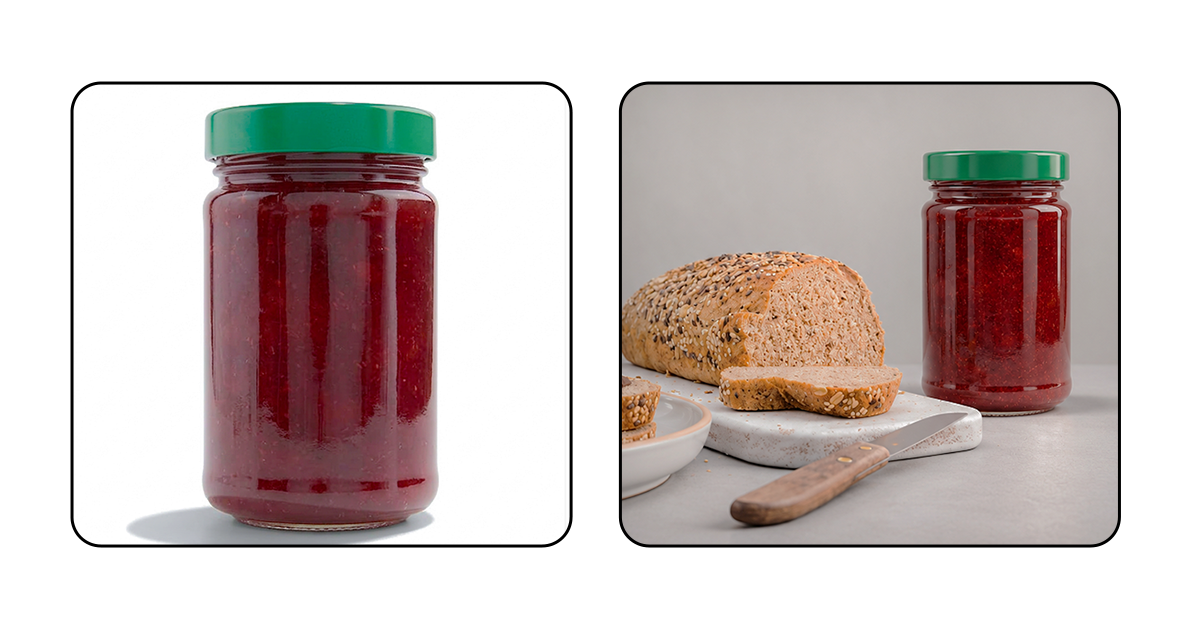
Product photography shows the item on its own, usually on a plain white or colored background, so shoppers see exactly what they're buying. Lifestyle photography shows the product in use, in a real scene with people, food or props, so shoppers can picture it in their own routine.
Most brands need both, in different places and at different costs. We shoot both for food, beverage and wellness brands, often on the same day in our Santa Monica studio.
So the useful decision is which images go where, how many of each you need and how to get them without booking two shoots.
Key Takeaways
Product shots handle the facts. They anchor product listings, Amazon's main image and retail sell-in decks, where accuracy matters most.
Lifestyle shots handle the feeling. They earn attention on social, in ads and in email, where shoppers decide whether a product fits their life.
Amazon's main image has to sit on pure white. Lifestyle images belong in the secondary slots of the listing.
Lifestyle usually costs more per image. Styling, talent and locations add up, while published rates put white-background images at around $25 to $75 each.
One well-planned day can deliver both. Order the shot list by set-up, from white sweep to UGC-style, and crop each frame for listings, social and ads.
Quick answer: Product photography isolates the item on a plain background for accuracy, and lifestyle photography shows it in use for context and emotion. Use product shots for listings and Amazon's main image, use lifestyle for social, ads and email, and plan one shoot that captures both.
Hart & Highland shoots product and lifestyle content for consumer brands at our Santa Monica studio and on location.
Product vs. Lifestyle Photography at a Glance
Types of Product Photography
For food, beverage and wellness brands, packshots, detail shots and flat lays do most of the work. Ghost mannequin only comes into play if you sell branded apparel or merch alongside the product.
Types of Lifestyle Photography
Lifestyle product photography puts your product in a moment the shopper recognizes, like a weekday breakfast, a gym bag or a picnic blanket.
UGC-style images and clips tend to earn their keep in paid social, where polished studio work can read as an ad. We shoot UGC-style video alongside studio sets, so both share the same product, props and styling.
Where to Use Each Type of Photo
Amazon's Main Image Rules
Amazon is strict about the first image on a listing, and Amazon Seller Central sets out the requirements every seller has to meet.
Pure white background. RGB 255, 255, 255, with no scene, shadow box or gradient behind the product.
The product fills about 85% of the frame. Leave only a thin margin of white around it.
No added text, logos, borders or watermarks. Anything on the image has to be printed on the product itself.
Only what's sold. Props or accessories that aren't included in the purchase stay out of the main image.
Zoom-ready size. At least 1,000 pixels on the longest side lets shoppers zoom in.
Lifestyle images are welcome in the secondary slots, alongside detail shots and infographics. That's where in-use and on-model photos earn their place on Amazon product photography sets.
Is Lifestyle Photography More Expensive?
Usually, yes. Product photography is often priced per image, while lifestyle work is priced by the day, with styling, talent and locations added on top.
The per-image figure comes from Snappr's pricing guide, and the day rate and food styling ranges come from Shopify's 2026 guide. Talent, location and retouching vary too widely for a reliable published range, so expect those quoted per project.
Lifestyle also takes more set-up time per frame, so a day yields fewer finished images than a white sweep would. Shooting both on the same day helps, since packshots can run while the next lifestyle set is being built.
How to Capture Both in One Shoot Day
Order the day by set-up and start with the white sweep. Packshots are fast, and getting them done early leaves the afternoon for scenes that need styling and talent.
Frame each set-up wide enough to crop to 9:16, 4:5, 1:1 and 16:9, so one frame covers stories, feed, ads and banners. Our content shoot guide covers the full shot list grid and a sample run-of-show.
Product and Lifestyle Photography for Food, Beverage and Wellness Brands
Food product photography brings problems that most other categories never face. Products melt, fizz, sweat and wilt under hot lights, and labels still have to read on a phone.
Label legibility. Angle cans and bottles slightly to kill glare, and check that the flavor name still reads at thumbnail size.
Pours. Shoot pours at a fast shutter speed and keep spare product cold, since every take uses up a full serving.
Condensation. Real beads of water fade within minutes, so stylists often mist a glycerin and water mix that holds its shape through a whole set.
Melt windows. Ice cream and frozen desserts stay camera-ready for a short window, so light the shot with a stand-in and swap in the real product at the last moment.
Ingredient flat lays. Lay out what's actually inside, like fruit, botanicals or grains, so the claim on the pack has something to point to.
We've photographed products for Coolhaus, Lucini, Partake Foods, BaseCulture, Runa and KÖE, and our food photography portfolio shows how each shoot handled these details.
Do You Need Both? A Quick Checklist
Answer yes or no to each question, then look at where most of your yes answers land.
Mostly product answers point to product-only, and mostly lifestyle answers point to a lifestyle-led shoot. A mix means you need both, and one day planned by set-up will usually cover it.
When Hart & Highland Isn't the Right Fit
If you have a large catalog that only needs white-background packshots, a high-volume packshot studio such as Soona or Squareshot is a better fit than we are. They're set up for fast, consistent catalog work at scale.
We pull ahead when the images have to sell across social, ads and retail with one look. The same team plans the shot list, styles the sets, shoots product and lifestyle in one day and edits it all in house.
FAQs About Product and Lifestyle Photography
What Is the Difference Between Product and Lifestyle Photography?
Product photography isolates the item on a plain background, while lifestyle photography shows it in use and in context. We at Hart & Highland shoot both for food, beverage and wellness brands, often in a single shoot day.
Which Is Better for Ecommerce?
You need both. Product shots work best for the main listing image, and lifestyle images do more in the rest of the gallery and in your ads.
Is Lifestyle Photography More Expensive?
Usually, because of styling, talent and location. Published rates put white-background images at around $25 to $75 each, while photographer day rates for styled work run $500 to $3,000 before styling and talent.
Can I Use Lifestyle Photos on Amazon?
Yes, in the secondary image slots. The main image must be on a pure white background with the product filling about 85% of the frame.
What Is a Packshot?
A packshot is a clean, straight-on image of a product on a plain background. Brands use packshots in retail decks, product listings and press kits.
How Many Product Photos Do I Need Per Product?
Plan a main image, two or three angles, a detail shot, a scale shot and two or three lifestyle images for each SKU. That's seven to nine images, enough for most listings with a few left over for social.
Is UGC a Type of Lifestyle Photography?
UGC-style content is lifestyle photography shot to look creator-made. Whether your team or real customers make it, the usage terms decide where it can run, including in paid ads.
Plan Your Next Shoot With Hart & Highland
One shoot day can feed your listings, your feed, your ads and your inbox, as long as the shot list is built for all of them.
We own our gear, handle post-production in house and work from our Santa Monica studio, so product and lifestyle images share one look across campaigns, creative, social and influencer. See our creative and production services and book a call.